
Arrow Master
NewPubCoPuzzle
4.8540.00 Reviews
- Version
- 1.08.00
- Installs
- 1.00M
- Age Rating
- Everyone
Screenshots

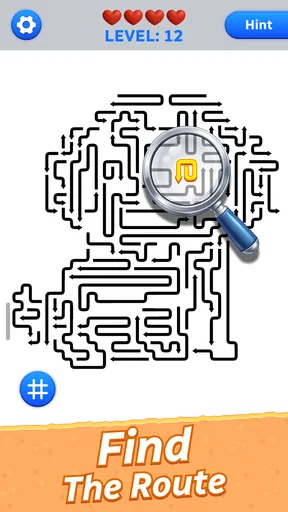
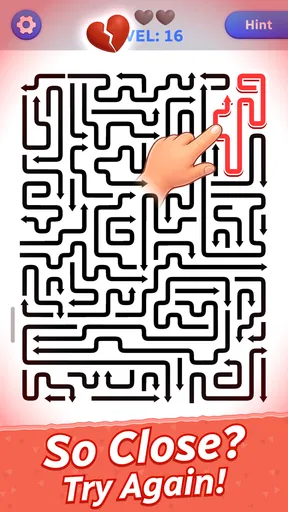

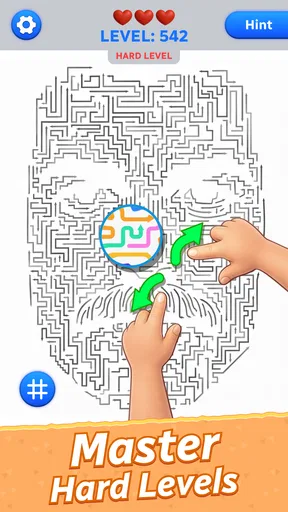
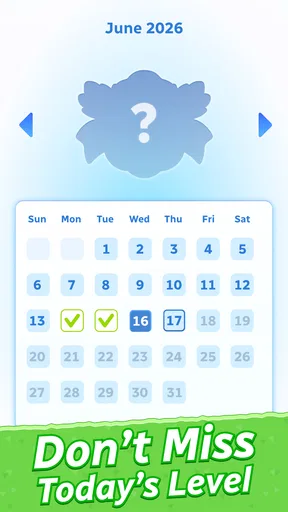

Our Review of Arrow Master
 Analysis by Appyee
Arrow Master is a puzzle game about reading a crowded arrangement of arrows and finding a route that lets them leave from the edge. I found the basic idea easy to understand but surprisingly demanding once several directions compete for the same space. It is the kind of game I can pick up for a short break, solve one arrangement, and put down without needing to remember a complicated story or a long list of rules.
That simplicity is its strongest quality. The game, developed by NewPubCo, focuses on visual reasoning rather than reflexes, character collection, or a large progression system. Its store summary describes the central challenge as untangling arrows by finding the right path to the edge, and that is exactly the mental task that defines the experience. You study the board, identify what can move safely, and try not to trap the remaining pieces by making a careless choice.
It is available as a free puzzle game for Everyone, with support beginning at Android 7.1. The current version is 1.08.00, and the game has passed one million installs. Its average score is 4.8 from around twenty thousand ratings, with roughly five hundred reviews, so there is clear interest in this particular style of short-form puzzle. Those figures do not replace personal testing, but they do suggest that the straightforward format has found an audience.
How the arrow puzzles feel in everyday play
The first thing I noticed is that the challenge comes from sequence, not from learning a complicated control scheme. An arrow may appear to have an obvious exit, yet another piece can block the route or make that move a bad opening. The useful question is not simply “Which arrow can move?” but “Which arrow should move first?” That small change in perspective gives the game more depth than its short description suggests.
I usually approach a board in two passes. First, I scan the outer edges and look for arrows whose paths seem least obstructed. Then I check the middle for pieces that are acting like locks. Removing one central obstruction can open several later routes, while moving an apparently convenient arrow too early can leave the rest of the arrangement harder to read. This method is more reliable than tapping quickly and hoping the board sorts itself out.
The game works particularly well in ordinary waiting-time situations. I can imagine playing it while waiting for a drink, during a short commute, or between tasks when I want something more active than scrolling but less demanding than a full game session. A puzzle can be examined in seconds, yet solving it encourages me to slow down and verify the consequences of each move.
That also creates a useful stopping point. Many mobile puzzle games push me toward another round through timers, energy limits, or a constant stream of rewards. Arrow Master’s appeal is more immediate: the board itself supplies the reason to continue. When I solve a difficult arrangement, the satisfaction comes from understanding the order of moves rather than from collecting a separate prize.
For new players, I recommend resisting the urge to clear the easiest-looking arrow first. Instead, trace its full route with your eyes. If another arrow sits along that line, consider whether removing the blocker would create more options. This habit is one of the first meaningful skills the game teaches, and it remains useful when the layouts become visually busier.
A second practical tip is to treat the board as a set of dependencies. Some arrows are free choices, while others cannot be useful until a neighboring path has been opened. I mentally divide them into “safe now,” “possible later,” and “dangerous to touch.” That simple classification reduces random moves and makes the puzzle feel more like planning than trial and error.
The visual nature of the challenge is also a limitation for some players. If you prefer word puzzles, number logic, or puzzles with a strong narrative wrapper, the arrow arrangement may feel repetitive. There is no indication in the core concept that it is trying to be a story-driven adventure. Its pleasure comes from spatial order, so anyone who dislikes scanning similar shapes may lose interest quickly.
Where the pressure comes from
Even without relying on fast reactions, the game can create pressure through uncertainty. A move may look harmless because the selected arrow is close to the edge, but the resulting empty space can change how the remaining routes are interpreted. I found that the most uncomfortable moments were not caused by a difficult gesture; they came from realizing that I had committed to a poor order and needed to rethink the whole board.
That pressure is generally constructive. It encourages careful observation instead of frantic tapping. At the same time, it can become frustrating if the game gives too little room to recover from an early mistake. This is an important distinction for potential players: the experience suits people who enjoy analyzing a position, but it may be less comfortable for anyone who wants every move to be reversible or forgiving.
When I get stuck, I do not immediately restart mentally from the same assumption. I look for the arrow that is limiting the greatest number of other paths. Removing that bottleneck often reveals the next step. If no route appears safe, I compare the arrows by how much open space they would create rather than by how close they are to the edge. That is a more advanced way to play, and it helps prevent the common mistake of choosing the most obvious exit.
Another useful approach is to pause after every meaningful removal. The board may look simpler, but the new arrangement can change the best order completely. I find that taking a brief visual reset is better than continuing on autopilot. This is especially helpful during a quick session on a small phone screen, where several arrowheads and paths can blend together.
The free entry point makes experimentation easy. I can install the game without committing money and decide whether this style of spatial puzzle suits me. The purchase information is clear enough to establish one important boundary: in-app purchases are listed at $5.99 per item. That tells me spending is possible, but it does not by itself explain what those items provide or whether they affect solving. I would therefore treat purchases as optional until their purpose is visible in the game itself.
That uncertainty matters because puzzle games can handle assistance in very different ways. A purchase might be useful to someone who wants help after getting stuck, or it might be connected to another convenience. Without a confirmed description of each item, I would not assume that paying improves the core puzzle, removes interruptions, or changes progression. My practical advice is to play several boards first and decide whether the free experience already gives you enough value.
Fairness, spending, and the right expectations
From a fairness perspective, Arrow Master is most appealing when the board remains the main source of difficulty. A puzzle feels satisfying when the solution comes from better observation, not from having access to a stronger tool. The confirmed price of $5.99 per item means I would pay attention to how any optional purchase is presented, particularly if it offers help during a difficult arrangement.
I would not call the game unfair merely because it contains purchases. The important question is whether a player can understand and solve the arrow layouts without spending. The available product facts establish that the game is free to download and that purchases exist, but they do not establish the exact role of those purchases. That is why my recommendation is cautious rather than negative: enjoy the free portion first, and only consider paying after seeing a clear benefit that matches how you want to play.
This is also where Arrow Master differs from many familiar puzzle alternatives. A match-three game usually rewards quick pattern recognition and often builds momentum through chains. A word game tests vocabulary and may depend on the language you use. A Sudoku-style game asks you to maintain numerical constraints across a grid. Here, the key skill is directional planning: you are managing paths, blockers, and order of removal.
That difference makes it a good choice for someone who likes spatial problems but does not want a timer-driven arcade experience. It is less suitable if you want social competition, elaborate customization, or a puzzle that changes its rules dramatically from one stage to the next. The attraction is focused and narrow, which is a strength when it matches your taste and a weakness when it does not.
I also appreciate that the Everyone age rating makes the game easy to consider for a broad audience. That does not guarantee that every puzzle will feel easy, of course. The age label describes suitability, while the actual challenge comes from visual planning. A younger player may understand the arrows immediately but still need patience to discover the correct order.
For families, I think it could work as a shared problem-solving activity rather than a traditional multiplayer game. One person can suggest which arrow to examine, while another checks whether the proposed route is safe. That turns a solitary board into a small conversation about consequences. The trade-off is that the game’s value in this setting depends on whether everyone enjoys discussing a solution instead of taking turns in a more formal mode.
What I would check before making it a long-term game
The strongest confirmed signals are the free price, broad age rating, large install base, and high average rating. They make the game easy to try and suggest that many players enjoy its central concept. Still, those signals do not answer every question a careful player may have about long-term use. I would want to see how much the puzzles vary, how the difficulty develops, and whether the available purchase items feel necessary or merely optional.
I would also pay attention to repetition. A path-clearing puzzle can remain enjoyable when each arrangement demands a different order of thought, but it can lose its appeal if the same visual pattern returns too often. The game’s concept has enough room for interesting variations, yet the store summary alone cannot show how broad that variety is. My own recommendation is therefore strongest for short sessions and for players who already know they enjoy this kind of spatial untangling.
Version 1.08.00 indicates that the game has an established current build rather than being presented only as an initial release. That is useful context when deciding whether to try it, but I would still judge the experience by its present controls and puzzle flow. A version number does not tell me whether a particular irritation has been addressed, so I would not treat it as a promise of any specific feature.
Device compatibility is relatively approachable because the minimum operating system is Android 7.1. If your phone meets that requirement, the technical barrier to trying the game is modest. The more relevant practical issue is screen readability: arrow-heavy boards depend on seeing direction and obstruction clearly. On a smaller or lower-quality display, careful scanning may be less comfortable than it is on a larger screen.
One detail I would not overlook is the difference between a high rating and a perfect personal fit. Around twenty thousand ratings and roughly five hundred written reviews provide useful evidence that the game connects with many people, but puzzle preferences are unusually personal. Some players want a calm logic exercise; others want constant novelty or a competitive ladder. A strong average score cannot decide which group you belong to, so the free download is the sensible way to test that match.
Who should play and who should pass
I would recommend Arrow Master to anyone who enjoys visual logic, gradual problem solving, and games that can be played in compact sessions. It is especially suitable if you like working backward from consequences: identify a route, imagine what it blocks, and choose an order that keeps future options open. The game also suits players who prefer a clean central mechanic over characters, equipment, or story exposition.
I would be more hesitant to recommend it to someone who needs strong variety from the beginning. If your favorite puzzle games are built around changing objectives, rich narratives, or direct competition, the arrow-focused format may feel too contained. Players who become annoyed by having to restart after a mistaken sequence should also approach carefully, because the satisfaction here depends on accepting that some choices need to be reconsidered.
It is not the best alternative to a timed matching game when you want a burst of reflex-based excitement. It is also not a replacement for Sudoku if you specifically enjoy numerical deduction. Its place is between a visual brain teaser and a compact planning exercise. That makes its audience clear, and I think the game benefits from not pretending to be something broader.
My everyday use case would be a short break when I want to focus without beginning a large campaign. I would open it, inspect one arrangement, and use the first few moves to identify the board’s bottleneck. If the solution required deeper concentration, I would continue; if not, I could stop after a single success. That flexibility is more valuable to me than an elaborate reward structure because it respects the uneven length of real free time.
My trust verdict on the free puzzle
After weighing the accessible entry point against the unanswered questions around purchases and long-term variety, I see Arrow Master as a worthwhile try for fans of directional puzzles. NewPubCo has built its appeal around a focused idea that is easy to explain but capable of producing genuine moments of hesitation. The best boards reward patience, and the game gives me a reason to think about order rather than simply react.
I would keep my spending decision separate from my enjoyment of the puzzles. The game is free, while each listed in-app purchase costs $5.99, so there is no need to pay before knowing whether the core loop works for you. I would avoid assuming that an item is essential or that it changes fairness until its function is clear during play. That approach protects the value of the free trial and keeps the decision based on actual use rather than impulse.
My bottom line is simple: try it if you want calm, visual problem solving with a satisfying “one more board” rhythm. The game is not ideal for players seeking story, social competition, or constant mechanical surprises, and its purchase context deserves a careful look. For the right audience, though, the act of finding a safe sequence through a crowded arrow layout is focused, portable, and more engaging than the minimal premise might suggest.
Verdict
Strengths of Arrow Master
- Simple controls make it easy to start playing immediately.
- Short levels are convenient for quick gaming sessions.
- Satisfying arrow mechanics give each successful shot a rewarding feel.
- Bright visuals make targets and obstacles easy to recognize.
- Playable offline, making it useful when an internet connection is unavailable.
Limitations of Arrow Master
- Gameplay can become repetitive after mastering the basic shooting pattern.
- Difficulty may feel uneven in later levels.
- Limited customization reduces long-term personalization.
- Some players may find the progression too brief.
- Ads can interrupt the experience, especially between levels.
Other Releases by NewPubCo
View All


Similar Picks in This Category
View All
Block Blast!
HungryStudio4.8

Braindom: Brain Games Test
Lahana Game Studio4.6

AMAZE!
CrazyLabs LTD4.6

Sudoku - Classic Sudoku Puzzle
Oakever Games4.7

Art Puzzle - Puzzle Games
Easybrain4.8

Amaze GO!
Oakever Games4.9
Frequently Asked Questions
What is Arrow Master, and how does the gameplay work?
Arrow Master is a casual puzzle game focused on aiming, timing, and clearing targets with arrows. In each level, you generally need to launch arrows in the correct direction while avoiding obstacles, blocked paths, or limited-move conditions. The early stages are easy to understand, but later puzzles require more careful planning, patience, and attention to the order in which actions are performed.
Is Arrow Master free to download and play?
Arrow Master can usually be downloaded and played for free, although the game may include advertisements and optional in-app purchases. Ads can appear between levels or when you request extra assistance, while purchases may be offered for removing advertising, obtaining bonuses, or unlocking additional content. Before downloading, it is worth checking the store listing for the current pricing, payment options, and available purchase restrictions.
Does Arrow Master require an internet connection?
Many of the basic levels in Arrow Master may be playable without a constant internet connection, which is useful when traveling or when mobile data is limited. However, certain features can depend on connectivity, including advertisements, cloud synchronization, leaderboards, special events, or in-app purchases. The exact offline functionality may vary by version and device, so testing the game in airplane mode is recommended.
Is Arrow Master suitable for children and casual players?
Arrow Master is generally accessible to casual players because its controls are simple and the main objective can be learned quickly. Nevertheless, some levels may become challenging and require logical thinking rather than fast reflexes. Parents should review the age rating, advertising practices, and purchase settings before allowing children to play, especially if the device has a payment method connected to the app store.
What should I know about advertisements, permissions, and device compatibility?
Before installing Arrow Master, check whether your Android or iOS device meets the version requirements shown on the official store page. The game may display advertisements and request basic permissions related to notifications, analytics, or personalized advertising, depending on the version and region. You can often adjust notification and tracking preferences in your device settings, but disabling some options may affect certain features.
Play our best games!


